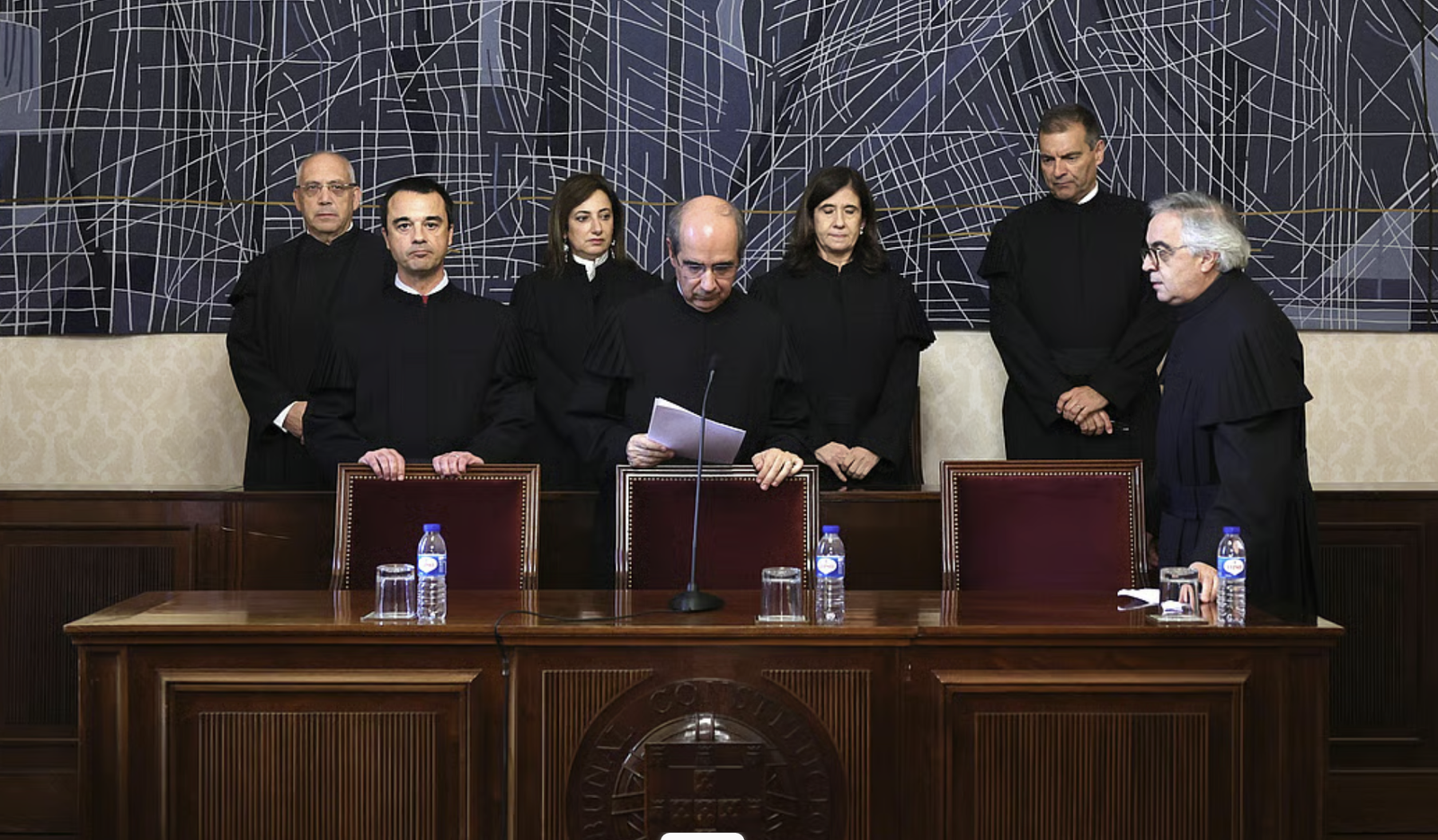

Portugal’s far-right Chega party is taking its citizenship-revocation fight to the constitutional level. On 7 May, the party formally tabled a proposal in Parliament to revise the Constitution itself, after the Constitutional Court blocked an earlier attempt to introduce loss of nationality as a criminal penalty.
That December ruling — issued unanimously — found that treating naturalised Portuguese citizens differently from those born Portuguese breached the constitutional principle of equality. Rather than abandon the policy, Chega is now trying to rewrite the rule it ran into.
The party’s central change targets Article 4, which currently delegates nationality matters to ordinary law. Under André Ventura’s proposal, the Constitution would itself spell out the conditions under which Portuguese nationality can be stripped: cases of fraud in the original acquisition, and conduct deemed harmful to the sovereignty or core values of the Portuguese state. The same package would also tighten the criteria for becoming Portuguese in the first place, layering in explicit requirements around language, history, culture, and adherence to national identity values.
Speaking to Renascença, Ventura framed the proposal as the start of a broader push to strip what he called the Constitution’s “ideological burden”, and signalled openness to negotiating with non-socialist parties on adjacent reforms — notably a reduction in the number of MPs and changes to the justice system.
Realistically, the timetable is long. Ventura himself has acknowledged that a full constitutional revision could stretch into 2027, a horizon that lines up with the PSD’s own working assumption for this legislature.
The political problem for Chega isn’t just procedural. Critics argue that even rewriting Article 4 won’t cure the underlying issue the Court flagged in December: any regime that lets the state revoke citizenship from naturalised Portuguese while leaving birth citizens untouched still creates two tiers of nationality — and that, opponents say, is the equality breach the Court was talking about.