
António José Seguro WINS PORTUGUESE PRESIDENTIAL ELECTION
WHAT ANTÓNIO JOSÉ SEGURO’S ELECTION SAYS ABOUT PORTUGAL, AND WHAT TO EXPECT NEXT
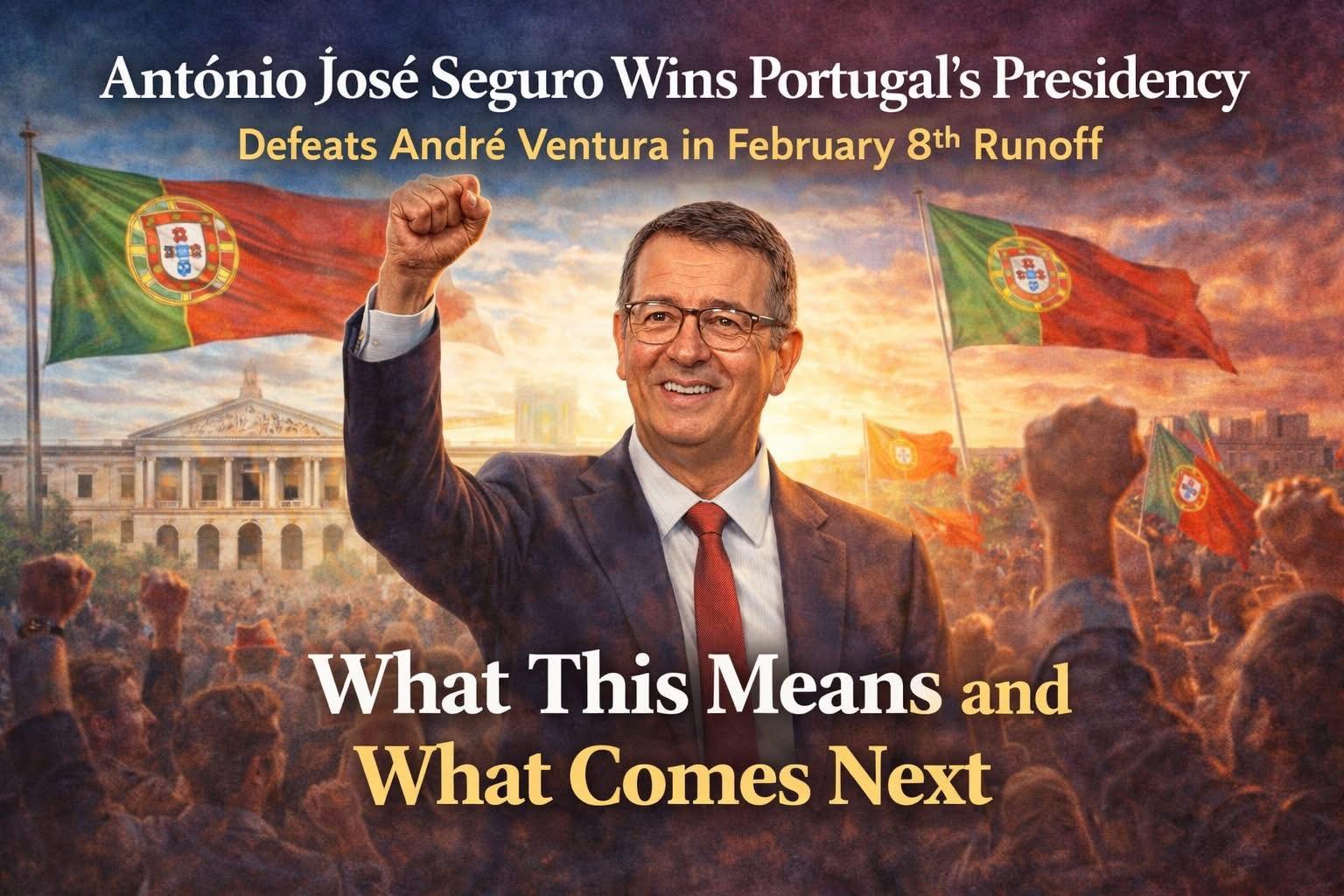
Portugal has now concluded its presidential election, with António José Seguro of the Socialist Party (PS) securing the presidency in the second round on February 8, 2026, defeating André Ventura.
The result matters less for what it changes immediately, and more for what it reveals about Portuguese society and the direction the country continues to choose.
What This Result Says About the Portuguese Electorate
The runoff outcome reflects a familiar pattern in modern Portuguese politics. While the first round showed fragmentation, the second round showed consolidation around institutional continuity. Voters from across the political spectrum, including center-left, center-right, and liberal camps, ultimately rallied behind a candidate perceived as stable, predictable, and constitutionally grounded.
This does not mean there is no dissatisfaction or frustration in Portuguese society. The first-round vote made that clear. But the second round shows where the limits are. When asked to choose between disruption and continuity, the electorate once again favored moderation.
In practical terms, this tells us something important about Portugal. Political protest exists, but it has not displaced a deep cultural preference for stability, legal safeguards, and gradual change. That preference cuts across generations and party lines.
Why the “Anyone but Him” Dynamic Matters
Seguro’s victory was not driven by enthusiasm alone. It was driven by convergence. Parties and voters who did not support him in the first round largely agreed on one thing in the second: the presidency should remain a stabilizing institution rather than a platform for confrontation.
This dynamic is not unique to Portugal, but it is especially strong here because of the role the presidency plays. The office is expected to calm political waters, not stir them. Seguro fit that expectation more comfortably than his opponent, and the electorate responded accordingly.
For expats, this matters because it shows how Portugal resolves tension. Disagreement is allowed. Protest votes are expressed. But when decisions must be finalized, the system channels that disagreement toward continuity rather than rupture.
What to Expect From Seguro as President
António José Seguro comes from the Socialist Party tradition, but his profile is less ideological than institutional. As president, he is expected to emphasize constitutional order, separation of powers, and restraint in moments of political friction.
This does not mean inactivity. It means predictability.
As president, Seguro can:
• Review legislation passed by parliament
• Refer laws to the Constitutional Court
• Act as a moderating voice during political crises
• Represent Portugal’s democratic continuity at home and abroad
What he cannot do is unilaterally change policy, rewrite immigration law, or direct government action. Those limits remain firmly in place.
Based on his political history and campaign positioning, expats should expect a presidency that prioritizes calm oversight over public confrontation, and legal process over political theater.
What This Means for the Years Ahead
Seguro’s election suggests that Portugal is likely to continue on its current path. Incremental change. Institutional caution. Strong constitutional guardrails. Adjustments to policy through parliament rather than through executive shock.
For residents and foreign nationals, the practical implication is stability. Immigration, residency, and nationality rules will continue to evolve through legislation and court review, not through presidential intervention. Sudden reversals or retroactive changes remain structurally unlikely.
More broadly, the result reinforces Portugal’s identity as a country that absorbs political pressure without allowing it to destabilize the system. Even after a rare runoff, the outcome reaffirmed continuity rather than disruption.
A Signal, Not a Surprise
While the runoff itself was unusual by recent historical standards, the final result was not. It aligned with Portugal’s long-standing political behavior: debate first, consolidation second, stability at the end.
For expats watching from inside the country, or considering a move, the message is consistent with what Portugal has shown for decades. Change happens here, but it happens slowly, legally, and within well-defined limits.
António José Seguro’s presidency does not mark a dramatic shift. It marks a reaffirmation of how Portugal prefers to govern itself.