
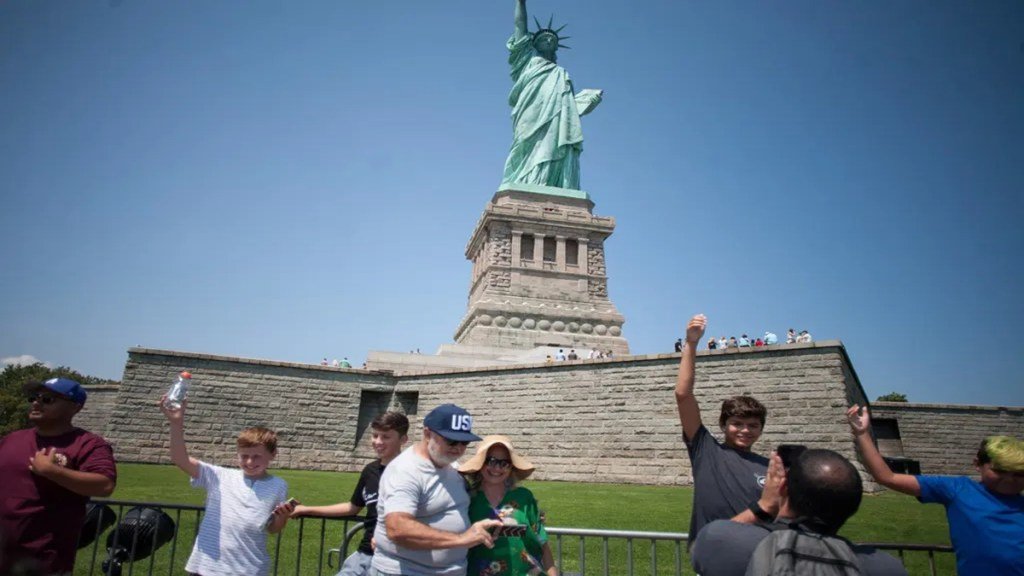
American citizenship holds great value for many around the world and is often seen as a major life achievement. For foreign nationals wishing to reside permanently in the United States and become citizens, the legal process is called naturalization.
Recently, the U.S. Citizenship and Immigration Services introduced a video message featuring President Donald Trump, which is now shown at naturalization ceremonies nationwide. In this message, President Trump welcomes new citizens and refers to American citizenship as a “sacred honor,” emphasizing that it comes with serious responsibilities. These ceremonies mark the final step in the naturalization process, where individuals take the Oath of Allegiance after meeting all eligibility criteria, such as obeying U.S. laws, demonstrating English language proficiency, and showing commitment to the U.S. Constitution.
Foreign nationals who become lawful permanent residents—often called green card holders—are authorized to live and work in the U.S. permanently. A green card, officially known as a Permanent Resident Card, serves as proof of this status. These individuals may eventually apply for citizenship if they meet certain requirements set by law. Generally, green card holders must have continuously lived in the U.S. for at least five years, speak and understand English, and pass a civics test during their naturalization interview.
The Immigration and Nationality Act outlines various paths to becoming a lawful permanent resident. The most common way is through family ties, especially for immediate relatives of U.S. citizens, such as spouses, children, and parents. This group represents over 40% of new lawful permanent residents. Other family members may also qualify through specific preference categories, such as unmarried or married children of U.S. citizens and siblings, provided the sponsor is at least 21 years old.
In addition to family-based immigration, people with valuable skills, advanced degrees, or those investing in U.S. businesses can gain permanent residency through employment-based categories. These are divided into several preference levels, ranging from individuals with extraordinary abilities to unskilled workers and investors creating jobs in the U.S.
Diversity is another factor. Immigrants from countries with historically low immigration levels to the U.S. may be eligible for permanent residency through the diversity visa program. Humanitarian grounds also provide a basis for permanent residency in some cases.
According to a 2023 report from the Congressional Research Service, over 2.8 million U.S. citizens were born in India, ranking second only to Mexico. Additionally, around 290,000 Indian-born individuals with green cards were considered eligible to apply for naturalization at that time.
After entering the U.S., individuals on temporary visas must apply to adjust their immigration status if they wish to stay permanently. This adjustment of status process allows eligible noncitizens already in the U.S. to apply for lawful permanent residency without leaving the country.
Although the naturalization process is open to all green card holders who meet the requirements, delays and backlogs can be significant. For example, due to the high demand and limited annual quotas, Indian nationals may face extremely long wait times—sometimes decades—before obtaining green cards and becoming eligible for naturalization. Changes to U.S. immigration law, which are under Congress’s control, could affect these timelines by modifying quotas or adjusting country-specific limits.
In 2023, reports noted increased scrutiny in immigration processes, including the temporary suspension of some green card applications as part of a broader vetting initiative. This move particularly impacted refugees and other individuals already approved for immigration benefits.