

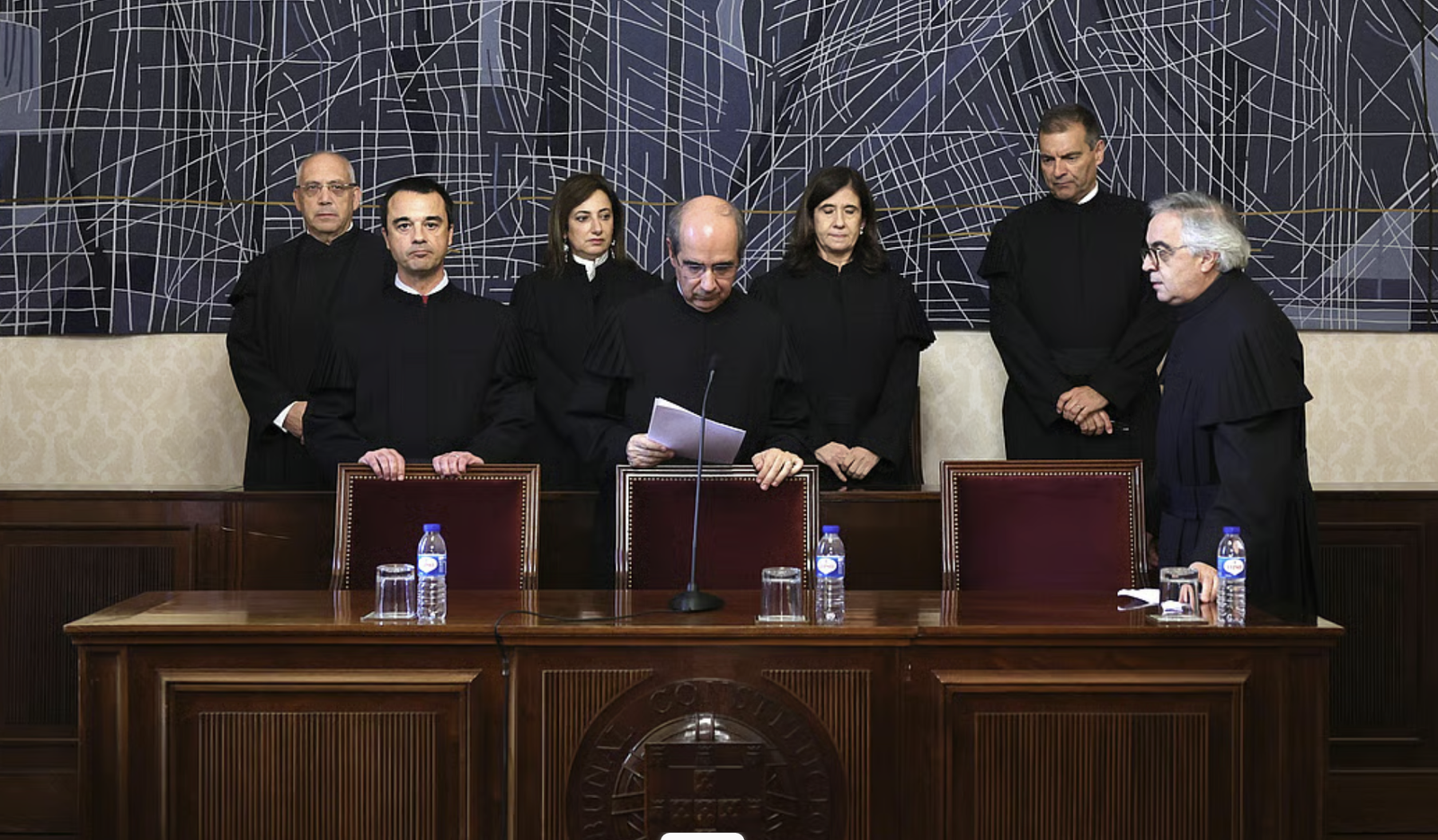
Portugal’s Constitutional Court has found the provisions it reviewed in the country’s new immigration legislation to be compatible with the Constitution. The measures introduce stricter rules for border procedures, detention and the removal of foreign nationals, including provisions that can affect families and minors.
The ruling was announced on 28 August and was unanimous among the judges who participated in the case.
The court described the legislation as involving measures designed to make border controls and return procedures more effective, while acknowledging that such measures can restrict the personal liberty of foreign nationals.
Court Says New Version Is Different From Earlier Legislation
Constitutional Court president João Carlos Loureiro said the provisions under consideration differed substantially from immigration measures previously examined by the court.
The new framework is connected to the implementation of the European Union’s Pact on Migration and Asylum, which introduces common European rules covering asylum procedures, border screening, migration management and returns.
Seven Constitutional Court judges participated in the decision: António José da Ascensão Ramos, Gabriela Cunha Rodrigues, Paula Ribeiro de Faria, Rui Guerra da Fonseca, Carlos Medeiros de Carvalho, Luís Filipe Lameira and João Carlos Loureiro.
President Requested Constitutional Review
President António José Seguro had sent the legislation to the Constitutional Court for preventive review on 7 August, following its approval by Parliament in July.
Among the issues raised were the protection of children, preservation of family unity and whether the legislation adequately respected the principle of the best interests of the child.
The Constitutional Court concluded that the provisions submitted for review did not violate the Constitution.
Importantly, the legislation does not mean that parents with Portuguese children or young children will automatically be expelled. Individual circumstances and legal safeguards still have to be considered.
Similarly, detention is not supposed to operate as the standard response. According to the court’s assessment, it should be applied where legally justified and, particularly in sensitive cases, as a measure of last resort.
Major Measures Examined by the Court
The Constitutional Court considered several significant provisions.
Foreign parents of Portuguese children: The legislation may permit removal or expulsion proceedings involving foreign nationals who have Portuguese minor children living in Portugal. This means having a Portuguese child does not create an absolute prohibition against removal, although family rights and the circumstances of the individual case remain relevant.
Children born in Portugal: The legislation contains provisions under which foreign children under five who were born in Portugal can potentially be subject to removal. Being born in Portugal does not necessarily mean a child has Portuguese nationality.
Unaccompanied minors: Under specified circumstances, unaccompanied foreign minors may be subject to detention-related measures, with additional protections applying because they are children.
Detention for up to 180 days: Foreign nationals may, where the statutory conditions are satisfied, remain in temporary detention facilities for periods reaching 180 days. Certain circumstances may affect how the detention period operates.
International-protection applicants: People seeking asylum or another form of international protection may, in defined circumstances, remain detained while challenging an adverse decision.
New circumstances during asylum proceedings: Authorities may maintain or impose detention where new facts or information arise that legally justify such a measure.
Border procedures: Applicants placed into specific border procedures may be required to remain at an international airport, temporary installation centre or another designated facility while their cases are processed.
Triage centres: Migrants, potentially including minors, may be required to remain available to authorities at designated triage facilities for up to seven days, subject to the applicable rules and exceptional extensions.
Appeals May Not Always Stop Removal
One of the most consequential aspects concerns appeals against immigration and international-protection decisions.
Under certain procedures, filing a court challenge against an unfavourable administrative decision will not necessarily suspend its effects automatically.
This can create circumstances in which removal may proceed even though judicial proceedings concerning the underlying immigration or protection decision have not yet reached a final conclusion.
Similar provisions can affect people whose refugee status or subsidiary protection has been withdrawn. Depending on the circumstances and applicable safeguards, removal may potentially occur before a court has delivered its final ruling on the challenge.
This does not mean every immigrant who appeals a decision can immediately be deported. The applicable procedure, individual circumstances, available judicial remedies and European and Portuguese fundamental-rights protections remain relevant.
What Happens Now?
Following the Constitutional Court’s decision, the legislation returns to President António José Seguro.
The President has 20 days to consider the legislation. He can either promulgate it or exercise a political veto. If he vetoes the legislation, it returns to Parliament, where lawmakers can reconsider it under the applicable constitutional procedure.
The Constitutional Court’s decision therefore removes the constitutional objection to the particular provisions referred for preventive review, but the legislation must still complete the remaining constitutional process before taking effect.
Why This Matters for Immigrants in Portugal
The decision represents an important development in Portugal’s migration and asylum framework. It potentially gives authorities broader and faster mechanisms for handling border procedures, detention and returns.
However, headlines suggesting that Portugal can now automatically deport parents, children or asylum seekers would overstate what the ruling means. Removal decisions remain subject to legal requirements, individual assessment and applicable fundamental-rights safeguards.