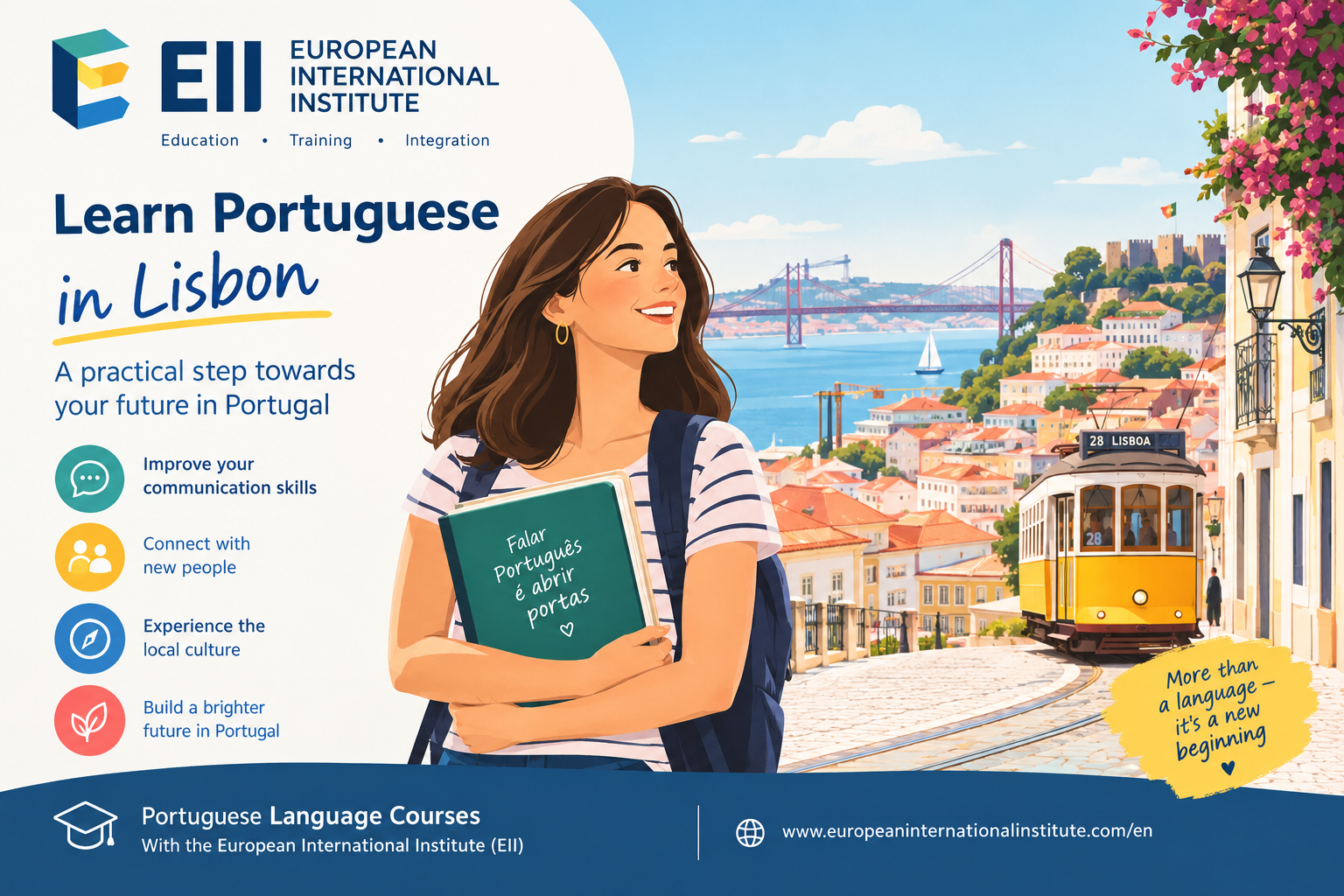


Learning Portuguese in Portugal is an excellent opportunity to discover Portuguese culture, make new friends, and integrate more easily into society. For those living, studying, or working in the country, learning Portuguese can open doors to new professional and academic opportunities.
Although learning a new language may seem challenging at first, with dedication, daily practice, and the right resources, it is possible to develop the skills needed to communicate confidently.
Start with the Basics
The first step in learning Portuguese is to become familiar with the alphabet, pronunciation, numbers, greetings, and the expressions most commonly used in everyday life.
In Portugal, people speak European Portuguese, whose pronunciation differs in several ways from Brazilian Portuguese. Therefore, it is important to choose learning materials specifically designed for European Portuguese.
Learning basic expressions such as Bom dia (Good morning), Por favor (Please), and Obrigado/Obrigada (Thank you) can help you start communicating in everyday situations and build confidence as you progress.
Attend Portuguese Language Courses in Portugal
One of the most effective ways to learn Portuguese is to attend an in-person or online course. Structured classes provide opportunities to study grammar, develop listening skills, and practise speaking with teachers and other students.
There are several options available in Portugal, depending on your goals, budget, and availability. These include private language schools, university programmes, and Portuguese as a Host Language (Português Língua de Acolhimento — PLA) courses designed to support the integration of foreign residents.
European International Institute: Learn Portuguese and Support Your Integration
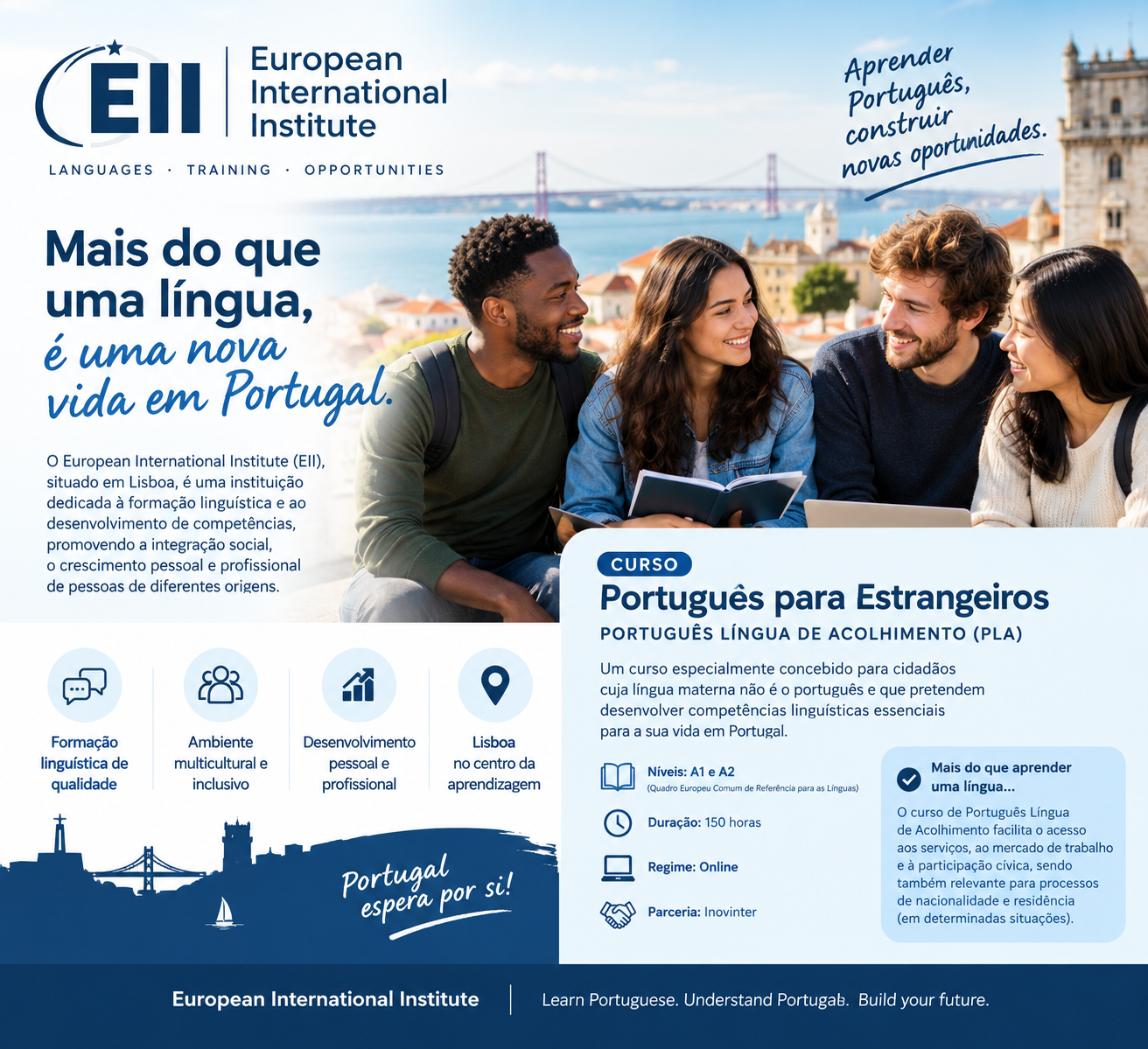
The European International Institute (EII) is an option for foreign residents looking to learn Portuguese and develop the language skills needed to integrate into Portuguese society.
Through its partnership with Inovinter, the institute offers certified Portuguese as a Host Language (PLA) training at A1 and A2 levels. The programme is designed for learners whose first language is not Portuguese and combines language learning with an understanding of Portuguese society, culture, and everyday communication.
The A1 and A2 programme comprises 150 hours of training and is offered online, with flexible scheduling options intended to accommodate different routines. Students can develop essential Portuguese language skills while preparing for practical situations in their personal, social, and professional lives.
The programme may also be relevant to individuals seeking to meet Portuguese language training requirements associated with nationality or residence procedures. However, eligibility and the acceptance of any particular certificate depend on the applicable legal requirements and the relevant authorities.
By combining structured learning with a focus on integration, the European International Institute aims to help international residents improve their Portuguese and gain greater confidence in their daily interactions.
If you are looking for a Portuguese language course in Portugal, you can learn more about the institute’s programmes, schedules, and enrolment options on its official website:
Visit the European International Institute
Practise Portuguese Every Day
Living in Portugal offers an important advantage: the opportunity to practise the language in real-life situations.
You do not need to master grammar before you start speaking. In fact, regular practice helps you develop fluency and gradually correct mistakes.
Here are some practical ways to improve your Portuguese:
- Talk to Portuguese colleagues, neighbours, and friends.
- Order food and drinks in Portuguese at cafés and restaurants.
- Ask questions and request information in shops and supermarkets.
- Use public transport to become familiar with directions and announcements.
- Participate in cultural, sporting, or community activities.
The most important thing is not to be afraid of making mistakes. Every conversation is an opportunity to learn.
Use Digital Resources to Improve Your Skills
Technology can complement classroom learning and make independent study easier. Applications, videos, podcasts, and educational platforms can help you expand your vocabulary, improve pronunciation, and understand spoken Portuguese.
You can use online resources to practise grammar, listen to European Portuguese conversations, and review new expressions. Setting aside 15 to 30 minutes each day for independent study can make a significant difference over time.
Create a Consistent Learning Routine
Consistency is one of the most important factors in language learning. Instead of studying for several hours only once a week, try to incorporate Portuguese into your daily routine.
You could spend one day learning vocabulary, another practising grammar, and another listening to Portuguese audio or reading short texts. Whenever possible, combine these activities with real conversations.
A regular routine helps reinforce what you learn in class and allows you to track your progress.
How Long Does It Take to Learn Portuguese?
The time required to learn Portuguese depends on several factors, including your native language, previous experience with other languages, frequency of practice, and exposure to Portuguese speakers.
Beginners may start understanding common expressions and participating in simple conversations after a period of regular study. Reaching an intermediate level generally requires more sustained practice.
The Common European Framework of Reference for Languages (CEFR) defines six main proficiency levels, from A1 (beginner) to C2 (proficient). Setting a realistic goal and choosing a course that matches your current level can help you progress more effectively.
Conclusion
Learning Portuguese in Portugal is a gradual process that requires patience, dedication, and a willingness to practise. Combining structured classes, digital resources, reading, listening, and everyday conversation can help you develop your language skills more comprehensively.
For foreign residents seeking a structured learning pathway, institutions such as the European International Institute offer Portuguese language training that focuses on communication and integration.
The key is to incorporate Portuguese into your daily routine, take advantage of opportunities to communicate, and recognise that making mistakes is a natural part of learning.
Learning Portuguese is about more than learning a language: it is a way to discover Portugal, understand its culture, build meaningful relationships, and create new personal and professional opportunities.