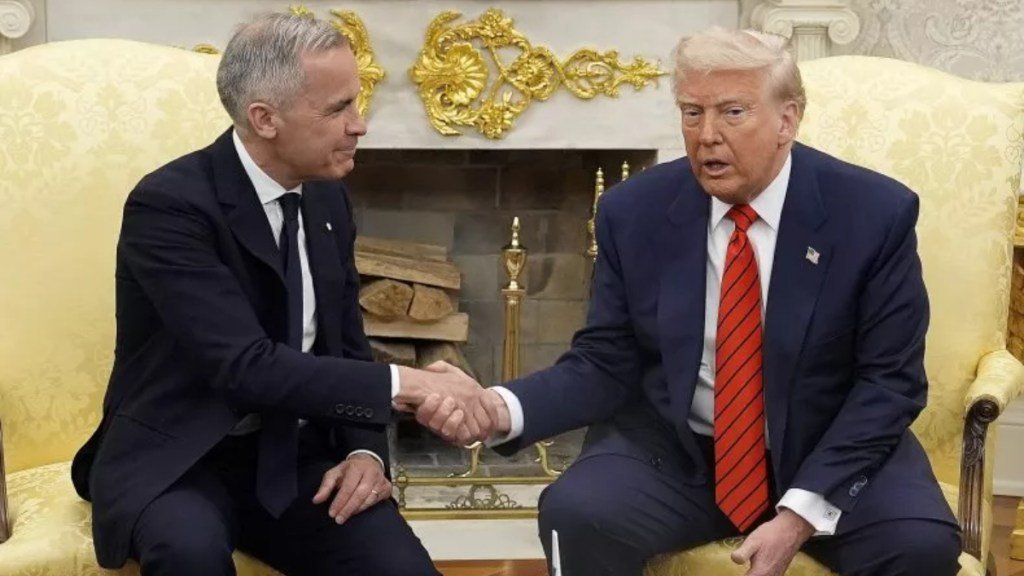


Donald Trump’s recent executive order has intensified concerns within the immigrant community, particularly among Indian immigrants. Vice President JD Vance’s statement that a green card does not guarantee an indefinite right to stay in the U.S. has only added to the anxiety. The administration’s strict immigration policies have left little room for relief.
The executive order signed by the president focuses on election integrity, requiring proof of U.S. citizenship to vote in federal elections. Trump referenced India’s voter ID system while advocating for a more secure voting process, stating that the U.S. relies heavily on self-attestation for citizenship. He emphasized the importance of fair elections free from fraud, errors, or suspicion to maintain the integrity of the democratic process.
In a separate development, the U.S. Department of Homeland Security has confirmed that certain green card applications have been paused. This decision has raised concerns among thousands of immigrants, including many from India. A Department of Homeland Security spokesperson explained that the temporary halt is due to additional screening and vetting under two executive orders focused on national security and public safety.
The pause on processing green card applications has added another layer of difficulty for immigrants already facing lengthy waiting periods. Critics argue that the move unfairly targets those seeking permanent residency and creates unnecessary delays. Many applicants have already been waiting over a year for their applications to be processed.
Meanwhile, Trump has introduced a new “gold card” visa program, which aims to replace the existing EB-5 Immigrant Investor Program. This initiative offers a pathway to citizenship for wealthy individuals who can pay a $5 million fee. The president has described it as a more sophisticated version of a green card, designed to attract individuals of wealth or exceptional talent. Companies would also be able to sponsor skilled workers under this program.
While the administration claims these measures are aimed at improving national security and economic growth, they have sparked criticism from immigrant advocacy groups. Many fear that financially privileged individuals will have an easier path to residency, while others will continue to face extensive delays and uncertainty.