
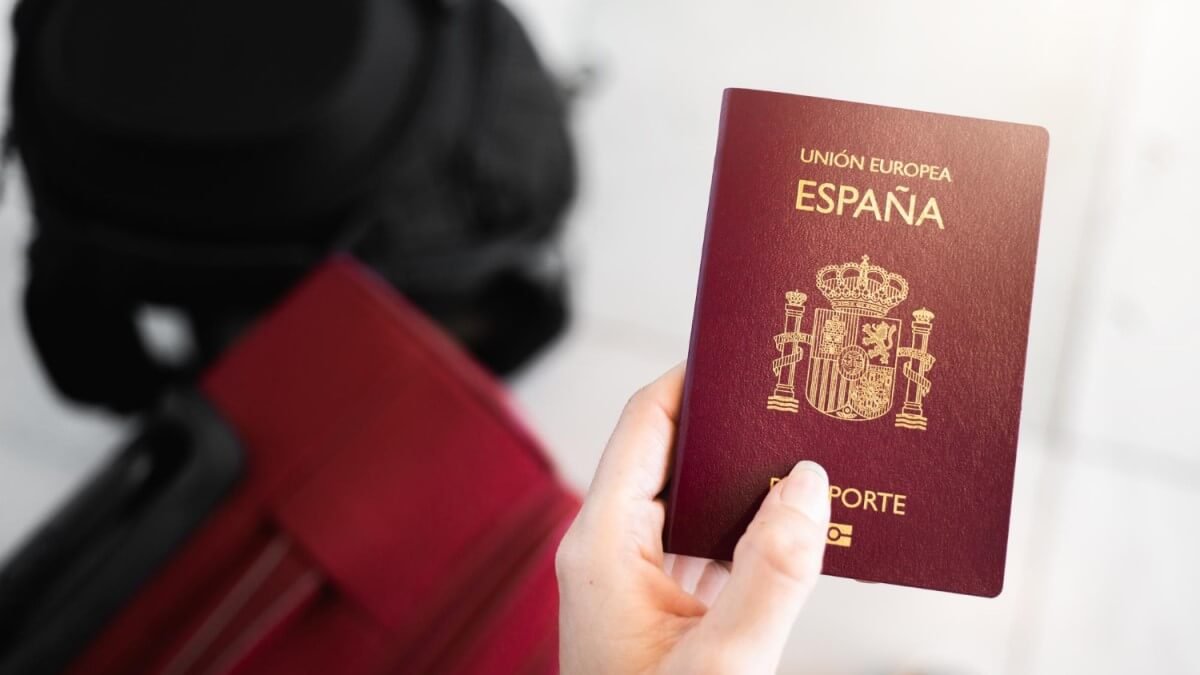
Acquiring Spanish citizenship has become increasingly difficult, with a record number of applications being rejected in 2024. According to the Ministry of Justice, a total of 20,099 citizenship applications were denied, more than double the number of rejections in 2023 (7,399). While the number of rejections has risen sharply, applications for citizenship have also increased significantly, Schengen.News reports.
In Spain, individuals can apply for citizenship through various methods, including residency, marriage (Nationality by option), or proving Sephardic Jewish heritage with historical ties to the country. Another option is through the Grandchildren Law, also known as the Law of Democratic Memory, which allows the children and grandchildren of Spanish emigrants to apply for citizenship.
According to a report by El Universo, certain Spanish surnames have been linked to eligibility for citizenship under the Grandchildren Law, through a list published by the Spanish government. However, applicants must meet additional requirements, as simply having a surname on the list is not enough.
List of Eligible Surnames for Citizenship Under the Democratic Law
The following surnames, among others, may indicate eligibility for Spanish citizenship under the Democratic Memory Law, subject to fulfilling other conditions:
Abraham, Acevedo, Acosta, Aguado, Aguiar, Aguilar, Alarcon, Alba, Aldana, Alcala, Alegre, Alfonso, Alfaro, Almeida, Alonso, Alvarez, Amaya, Aranda, Balthazar, Baez, Barral, Barrios, Benavente, Benitez, Bernal, Bravo, Bermejo, Cabrera, Calvo, Camacho, Carrasco, Carrillo, Carvajal, Castellanos, Delgado, Diez, Diaz, Dominguez, Duran, Espinosa, Esteban, Fernandez, Figueroa, Fuentes, Galvez, Garcia, Gonzalez, Gutierrez, Hernandez, Herrera, Hurtado, Ibanez, Israel, Jaen, Jimenez, Juarez, Julian, Madrid, Madrigal, Marquez, Martinez, Marín, Nunez, Ocampo, Ochoa, Olivares, Ortega, Pacheco, Padilla, Palma, Pascual, Pedraza, Perez, Quiros, Ramirez, Ramos, Rivera, Robles, Rivas, Rodriguez, Ruiz, Salazar, Salvador, Sanchez, Serrano, Silva, Talavera, Toledo, Ubeda, Uria, Valero, Vargas, Vazquez, Velazquez, Villanueva, Zalazar, Zaragoza, Zuniga.
Applying for Spanish Citizenship Under the Democratic Memory Law
According to the Ministry of Foreign Affairs, European Union, and Cooperation, naturalization through the Democratic Memory Law is available to individuals who meet one of the following criteria:
- Born outside Spain to a mother, father, grandmother, or grandfather who was originally Spanish.
- Born outside Spain to parents or grandparents who were originally Spanish but lost their nationality for political, religious, ideological, or sexual identity reasons.
- Children born outside Spain to mothers who lost their nationality by marrying foreign nationals.
Validity of the Democratic Memory Law
In an effort to simplify the process of obtaining citizenship for the descendants of Spanish emigrants born abroad, Spain introduced the Grandchildren Law in October 2022. Spanish Foreign Minister José Manuel Albares revealed that, between October 2022 and May 2024, more than 226,000 descendants of Spaniards applied for citizenship.
To further accommodate applicants, the Spanish Ministry of the Presidency, Justice, and Relations, in collaboration with the Spanish government, issued a decree extending the validity of applications for citizenship under the Democratic Memory Law until October 2025. On November 11, 2024, the Official State Gazette (BOE) published a modification to the instruction set out in the law, which extended the deadline for submission.
This extension allows applicants more time to submit their requests for Spanish nationality under the provisions of the Democratic Memory Law, giving many families of Spanish descent the chance to reclaim their ties to the country.