
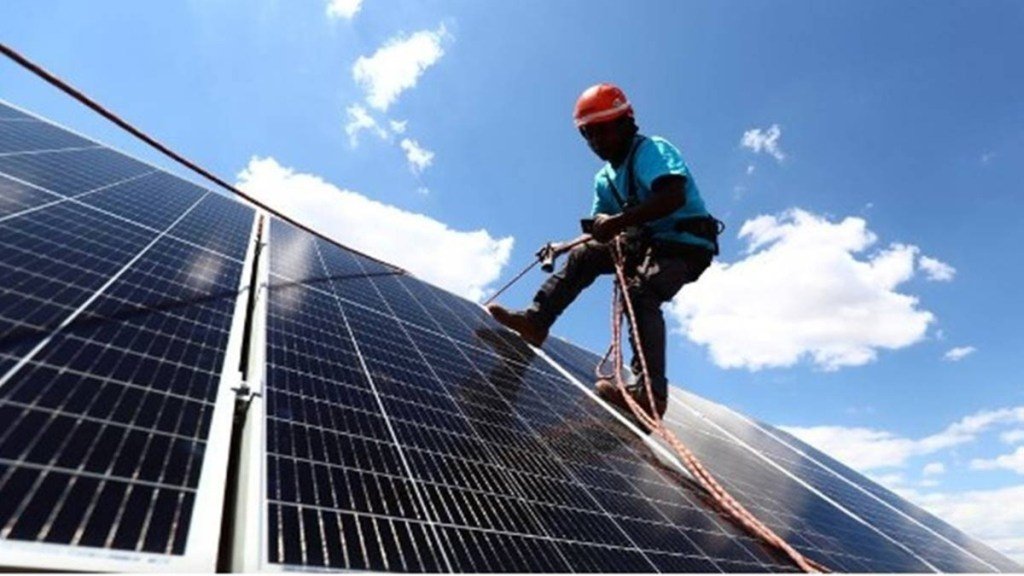
Under the PM Suryaghar Muft Bijlee Yojana, the government has facilitated 10.09 lakh rooftop solar connections as of March 10, according to Pralhad Joshi, Minister of New and Renewable Energy. Launched in February 2024, the scheme aims to install rooftop solar systems in 10 million households by 2027, with a total budget of Rs 75,021 crore. For the financial year 2024-25, Rs 13,175.33 crore has been allocated for the initiative.
As of March 10, the scheme has enabled the installation of over 3 GW of rooftop solar capacity, with an additional 27 GW targeted by March 2027. The program has received 47.3 lakh applications, with 6.13 lakh beneficiaries successfully receiving subsidies amounting to Rs 4,770 crore. A total of 3.10 lakh loan applications have been submitted, out of which 1.58 lakh have been sanctioned and 1.28 lakh disbursed. Beneficiaries can receive a subsidy of up to Rs 78,000 for installing a rooftop solar system of up to 3KW capacity.
Chandigarh and Daman & Diu have achieved full rooftop solar installation targets for government buildings. Other states, including Rajasthan, Maharashtra, Gujarat, and Tamil Nadu, have also made significant contributions to overall installations.
India’s total renewable energy capacity stood at 212.17 GW as of January, with solar power accounting for 100.34 GW. In 2024, the country added 25.2 GW of solar power capacity, significantly exceeding the 8.3 GW installed in 2023. Rooftop solar installations alone grew by 86%, reaching 3.2 GW in 2024 compared to 1.7 GW in the previous year. This growth was primarily driven by the government’s new rooftop solar initiative. Residential consumers accounted for 74% of total rooftop installations.
Gujarat, Maharashtra, and Kerala led the country in rooftop solar additions in 2024, contributing 36%, 20%, and 9% of total capacity additions, respectively. The issuance of rooftop solar tenders increased significantly, reaching 2.8 GW, a 136% rise from the previous year.
One of the major challenges in solar power project deployment in India is land availability. The government has been working with developers and state governments to address this issue and accelerate project implementation. The Ministry of New and Renewable Energy has been coordinating with key stakeholders, including REC Ltd, discoms, and vendors, to ensure the smooth execution of the scheme.
Seasonal factors, such as the monsoon period, briefly slowed the momentum of installations. However, the government maintains an average installation capacity of 3,000-3,500 units per day. The target for the current fiscal year is to exceed 12 lakh rooftop solar installations.
The scheme is expected to generate approximately one lakh crore units of electricity while reducing carbon dioxide emissions by 72 crore tonnes. Additionally, Model Solar Villages will be established, with one village in each district selected based on the highest level of solarization within six months. Villages that achieve the highest solar adoption will receive central financial assistance of Rs 1 crore. This initiative has already commenced and is expected to gain further momentum in the coming months.